
Namiko Hirasawa Chen, better known as just Nami, is the go-to source for many foodies around the world who want to cook Japanese food at home. She was born in Japan and raised helping her mother cook meals, so she was a natural home chef. Her informative Website, Just One Cookbook (www.justonecookbook.com), launched in 2011, is the most popular online resource for Japanese food and cooking, with hundreds of recipes for everything from soups and sauces to sukiyaki and desserts.
But she’s not a stickler for people to follow her recipes. She lists ingredients, including alternates for people who don’t live by a Japanese or Asian supermarket. She also acknowledges that Japanese home cooking often relies on a “from the gut” style of culinary instinct.
“How many mothers and grandmothers never wrote down anything for their recipes?” she asks. “We just need to know enough to get started and then you remember how it should taste from your mom’s cooking.”
Shen Chen, Nami’s husband, who’s her video producer and business partner, adds, “You personalize it, make it your own.”
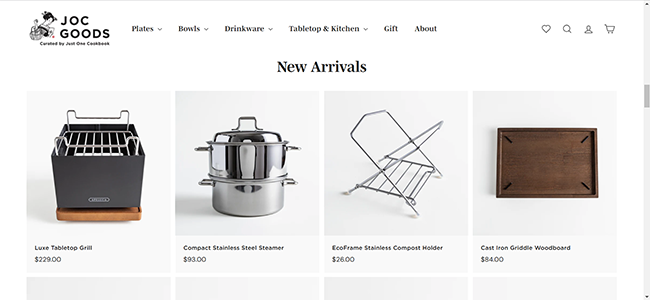
Now, the couple have launched a new business to help their fans personalize the presentation of the food they serve after cooking Nami’s recipes. JOC Goods (http://jocgoods.com) is an e-commerce Website for home chefs to add visual context to the Japanese culinary culture with an ever-growing selection of traditional tableware and kitchenware.
Nami is the star of the kitchen and the years of videos showing viewers on YouTube how the dishes are made, but Shen Chen, who worked in IT before turning to JOC full-time, is the digital brains behind the couple’s brand, including the photo setups and video shoots. The JOC brand has grown into a media empire built on an enormous cache of recipes on the Website, but also all the videos featured on the site as well as on the JOC YouTube channel, and all over social media, and three cookbooks available for order online (including through Amazon.com) as the interest in Japanese food has exploded across the world and especially in the U.S.
During the coronavirus pandemic, when restaurants were closing or reduced to takeout, cooking Japanese at home became an important goal for a new generation of foodies, and JOC’s Web visitors grew by leaps and bounds.
Now, it’s a good time for Japanese packaged goods or food products, especially with social media. And the Chens are hoping to benefit from the market for Japanese products, in large part because they kept getting viewer requests asking where people could find the dishes, plates, bowl, and even the utensils that Nami used in her videos and photos on the Website. Perfectly-cooked Japanese cuisine just didn’t look right on Corelware or European-style plates.
JOC Goods offers all the staples for serving up Japanese fare with a Japanese flair. The ceramic bowls and dishes are handmade by artisans throughout Japan that the Chens have sought out, who make small batches of their crafts. The products on JOC Goods are not mass-produced (even the tongs the couple sells are hand-finished and not like typical western kitchen tongs), and they’re all made in Japan (though the wooden spoons are made in China, they’re finished in Japan).
And, in a business decision that may surprise American consumers who are so used to ordering everything from Amazon, the products from Japanese craft studios and artisan shops who create products for JOC Goods are not shipped to and stored in a U.S. warehouse. Instead, the Chans have started a separate business in Tokyo that stores and ships orders worldwide. Shen says this set-up was more economical and reduced the need for middlemen and wholesalers in the world’s complex supply chain — thereby reducing the cost for many of the products.
There are some unique items for sale through JOC Goods, like a katsuobushi shaver to take blocks of fermented and petrified bonito fish and shave them down to the umami-packed foundation for dashi broth and the cool-looking curls that dance atop dishes like okonomiyaki and takoyaki. Sure, it’s not like that many orders will come in for such a product, but the Shens are already trying to figure out how they could add some food stuffs to the shop, including blocks of katsuobushi. Anyone who’s had a taste of fresh-shaved katsuo at a fish market in Japan will know that it tastes amazing. Nami had written an article on Just One Cookbook all about katsuobushi and its importance to Japanese cooking way back in 2013, and then updated it in August.
The Shens travel often to Japan with their kids (a son is in college and starting to make his own cooking videos aimed at student life, and their daughter is in junior high) and now the couple can use their travels to seek out new sources for products to feature on JOC Goods. The staff in Tokyo assembles each order and ships them out wrapped in a traditional furoshiki Japanese wrapping/carrying cloth.
Shen explains, “shipping worldwide from Japan is very cost-effective” because direct flights from Tokyo go all over the world.
Like the recipe Website with its rich archive of articles and content that adds cultural context not just to the food, but with travelogue information from the Shens’ visits to Japan, the JOC Goods site explains on each product’s description its use and history, so readers can learn the difference between rice bowls, soup bowls and serving bowls, or the benefits of using a hinoki wood cutting board.
Asked how she decides what to carry on the site, Nami explains simply, “I usually pick based on what I like, or what I use, or what I think is great.”
One item she’s really happy to have found and promote on JOC Goods is a stainless steel tray, with three compartments. “It’s kind of the prep tray, so you can do like, let’s say, you can put eggs in one section and panko in another, OK?” That reduces the mess from dredging chicken or pork katsu from bowls of egg to flour to panko before cooking.
 It makes her cooking life easier, so she knows it’ll be appreciated by her readers. That thought process shows that Nami cares about her audiences, and her goal from the very start of sharing recipes for friends has always been to help people enjoy cooking Japanese food. The recipes are all understandable, they’re easy, she explains each step and she’s aware that not all the ingredients in her recipes will be available everywhere in the West, so she has alternatives that would be easier to find if, say, someone is in the middle of Kansas.
Asked if having JOC Goods as a new family business will cause her to slow down her production of recipes, or God forbid — if she has hit the wall and will run out of new dishes to come with recipes for, Nami laughs. With over 300 dishes and over 14 years of cooking and shooting videos, she says, “No. I have a long list of reader requests. I’m not getting there to the end, and I feel like I don’t need to worry about new recipes to develop.”
She even feels guilty about it. “I don’t get there fast enough,” she laments.
Shen chimes in and agrees that Nami will never run out of recipes to post. “No, I think our passion is still true,” he says. “We strongly feel there’s nothing else like Japanese food in the world. It’s very unique. And we have a lot of readers with older parents in senior homes, even ones with dementia. And when they cook Japanese food for their mom or elders with dementia, they smile because they remember the flavor and the feeling, and it’s the same for us.
“That’s a joy we want to always give people.”

Nichi Bei News contributing writer Gil Asakawa is a journalist, blogger (www.nikkeiview.com) and author of “Being Japanese American” and “Tabemasho! Let’s Eat! The Tasty History of Japanese Food in America.”



Leave a Reply