
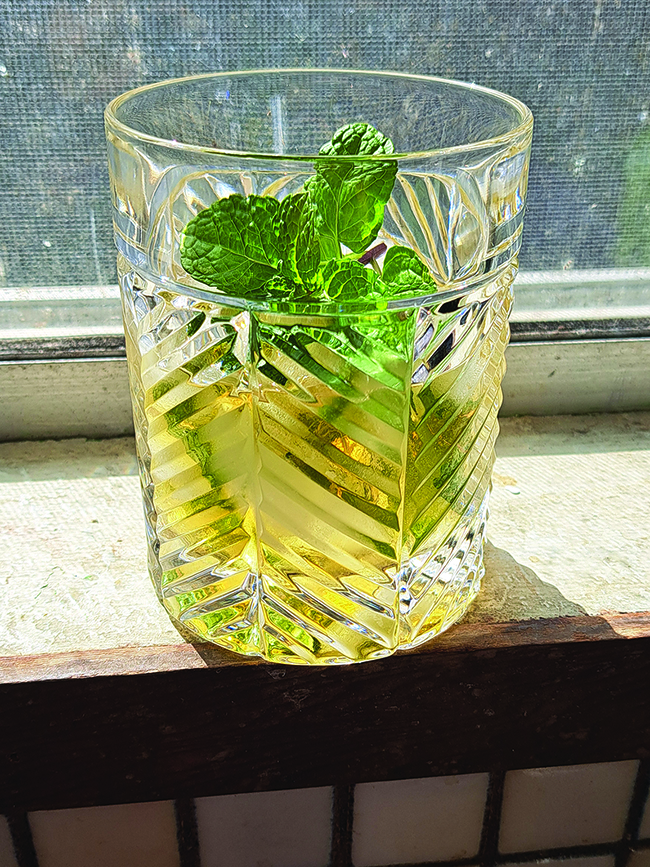
 Ever since retiring a little over four years ago, I’ve cultivated my own herb garden. I always have mint, green onions, Italian parsley, rosemary and bay leaves and often also have basil, sage, thyme and Hawaiian chili peppers in various pots on my side wall. But because I don’t naturally have a green thumb, there’s been a lot of trial and error over the years.
The biggest failure, which I’m not repeating, is growing fava beans. Or should I say growing fava bean plants. The plants grew nicely, but no fruiting or bean production occurred. Why? Fava beans grow best at 60 to 65 degree and looking at the ambient temperature the past two months (the coldest months in Kaneohe), it only dropped down to 64 degrees. And once summer rolls around, that will increase to the mid-to-high 70s at its lowest point.
Other Failures
While nor a true failure as I never attempted to propagate an olive tree, the same rationale applies to olives as fava beans. The ambient temperature needs to drop lower than Kaneohe ever attains before olive trees produce fruit — they’ll grow nicely and my original intention is due to St Ann’s Church in Kaneohe. They have two beautiful olive trees with gnarled branches and are likely close to 100 years old. But I always wondered when walking by their parking lot why I never seemed to see olives either hanging from the branches or on the ground. Olive trees will grow nicely in Hawai‘i but they’ll never produce fruit… at least in Kaneohe.
My other failure is cilantro — if you know me, you know that I flavor my cilantro with food.
I love cilantro in pico de gallo, rice dishes, noodle dishes and even make my own cilantro pesto. But I can never get it to propagate properly. Even with brand new potting soil and seeds that are in date. They simply grow to about four or five inches then start bolting (flowering) and even if I remove the developing flower buds, the leaves never grow to their full potential. They simply look like large dill fronds. So I continue to purchase my cilantro at the supermarket.
Everything in a Planter
Other than the bay leaves and rosemary, the rest of my green bounty is grown either in tall round or raised planters. Mainly because the bay leaves and rosemary are only used in cooked applications whereas most of the other herbs are also used raw. And because rat lungworm disease exists in the 50th, I try to prevent getting infected by Angiostrongylus cantonensis. This worm matures in rats who inconsiderately leave their infected droppings teeming with worm larvae for slugs and snails to consume. If an infected slug or worm crawls on your produce, their slimy trail can leave Angiostrogylus on your home grown produce and if consumed raw, can ultimately lead to neuroangiostrongyliasis. The worm can infect the brain and spinal cord and while most infections are self-limiting (meaning no anti-parasitics are required), most patients experience some degree of headaches, neck stiffness and pain and in a small percentage of patients, experience long-term disability.
That’s why along with using tall planters, I also wrap copper tape around the round planters and the legs of the raised planters as these invertebrate carriers supposedly don’t like crawling over copper as it shocks their underside. Of course, I’ve also learned that once the copper tape oxidizes to brown or green, they’ll happily crawl right over the tape.
Parsley is Your Friend
Because growing flat leaf parsley is one of my successes, I consume quite a bit of parsley, and so should you. Parsley is more than just a garnish as it’s a good source of the vitamins A, C and K as well as magnesium, potassium, calcium and iron. I use whole stems of parsley — not just the leaves — in my sandwiches in place of lettuce, add chopped cups into my grain salads and even make gremolata “pesto” by blitzing cups of parsley with lemon zest, garlic and olive oil. This pesto is then used as a sandwich spread, tossed with whole grain pasta or mixed with mayonnaise for use as a dip for chips or fries. I also use cupfuls of chopped parsley mixed with dried oregano, chili flake, garlic, onion powder and red wine vinegar for the classic Argentinian sauce, chimichurri.
Minty Fresh
Another of my successes is mint. All from one plant that was purchased at my local garden store. I simply transplanted that one plant into a large, flat storage bin filled with potting soil. Once the shoots expanded to cover the bin and it was time for harvest, I simply cut all shoots back to the soil level, added fertilizer and watered daily. Within two weeks, new shoots emerged giving me another crop in two to three weeks. I actually alternate two different storage bins so I always have a mature crop that’s ready to harvest. Other than my Lentil Salad recipe from October 2017 “Get That Protein Glow,” my favorite minty applications are libations:
Mint Julep (especially in May during Kentucky Derby week)
2 oz bourbon
8 to 10 mint leaves
½ to 1 oz simple syrup
(equal parts of sugar
dissolved in water)
Mint branch garnish
Gently muddle (press) the mint leaves in the bottom of a tall cocktail glass to release the mint oils without breaking the leaves. Fill half the glass with crushed ice then add the bourbon and simple syrup. Swirl to chill then fill the rest of the glass with crushed ice and garnish with the mint branch.
Traditionally served in a pewter or silver cup sipped while watching the Derby with your best headwear and perhaps consuming a Kentucky Hot Brown sandwich.
Mojito
2 oz white rum
(preferably Cuban)
3 to 4 mint leaves
½ oz simple syrup
¾ oz fresh lime juice
Sparkling water to top
Mint branch garnish
Lime wheel garnish
Gently muddle the mint leaves with the simple syrup in the bottom of a cocktail shaker.
Add the rum, lime juice and ice then cover and shake to chill the cocktail. Strain into a tall cocktail glass filled with fresh ice then top with the sparkling water and garnish with the mint and lime. Sip while wearing your finest Panama hat preferably created by Brent Black.
Ryan Tatsumoto is a graduate of both the University of Hawai‘i and UC San Francisco. He is a recently retired clinical pharmacist and a budding chef/recipe developer/wine taster. He writes from Kane’ohe, HI and can be reached at gochisogourmet@gmail.com. The views expressed in the preceding column are not necessarily those of the Nichi Bei News.

The Gochiso Gourmet is a column on food, wine and healthy eating. Ryan Tatsumoto is a graduate of both the University of Hawai‘i and UC San Francisco. He is a recently retired clinical pharmacist and a budding chef/recipe developer/wine taster. He writes from Kane’ohe, HI and can be reached at gochisogourmet@gmail.com. The views expressed in the preceding column are not necessarily those of the Nichi Bei News.






Leave a Reply